

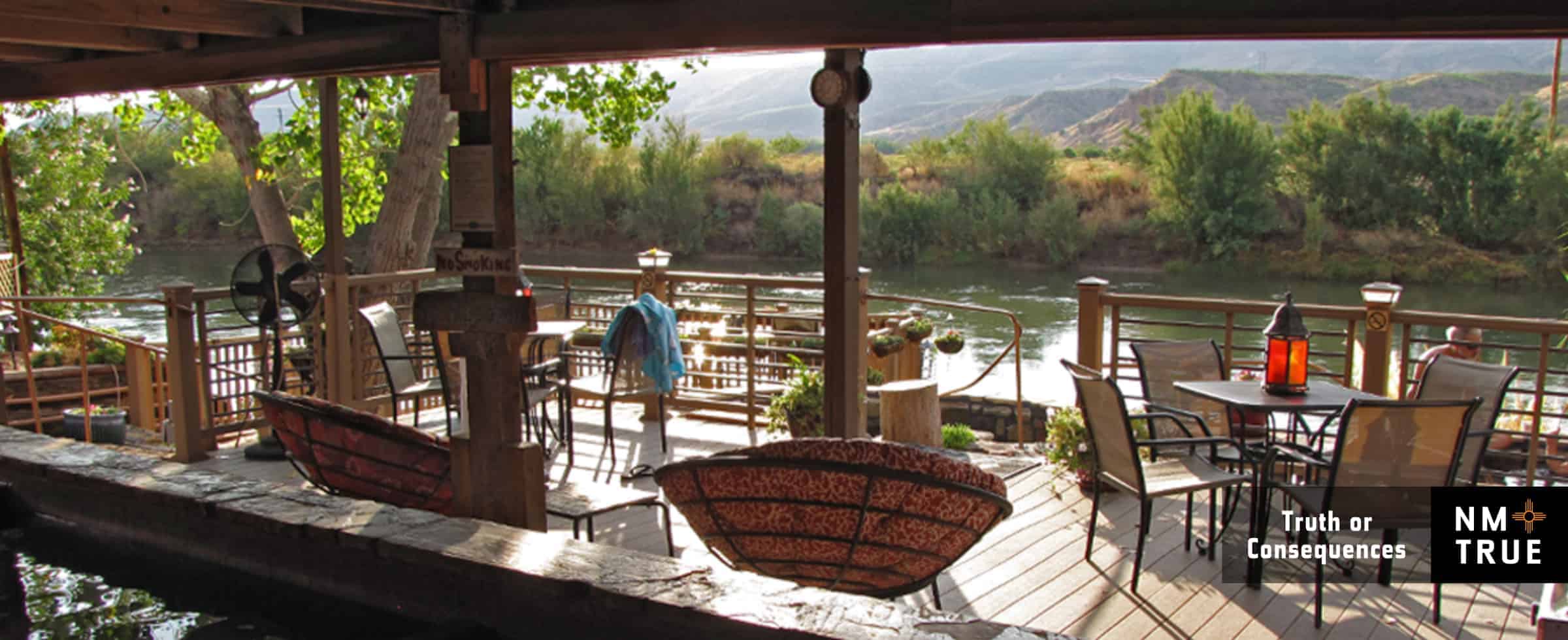
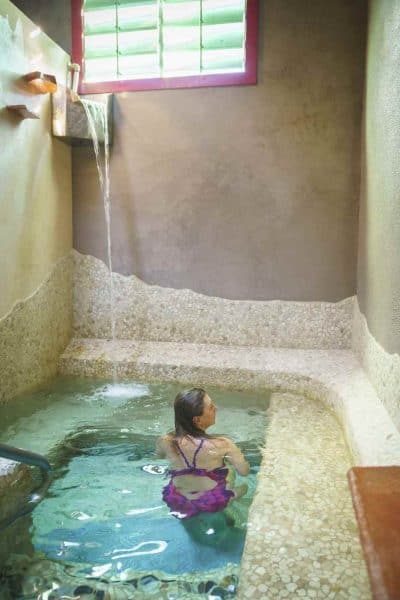
Since before recorded history, the therapeutic benefits of the hot springs in this area have drawn people here.
With almost 2,700 parts per million of assorted minerals, these thermal springs constitute some of the most heavily mineralized water in the United States. The continually flowing waters also have two important and unique features:
— The water has no unpleasant odor.
— The single largest ingredient in the water is chloride, a naturally occurring germ killer that sterilizes the skin and ensures the purity of the water.
Commercial Spas
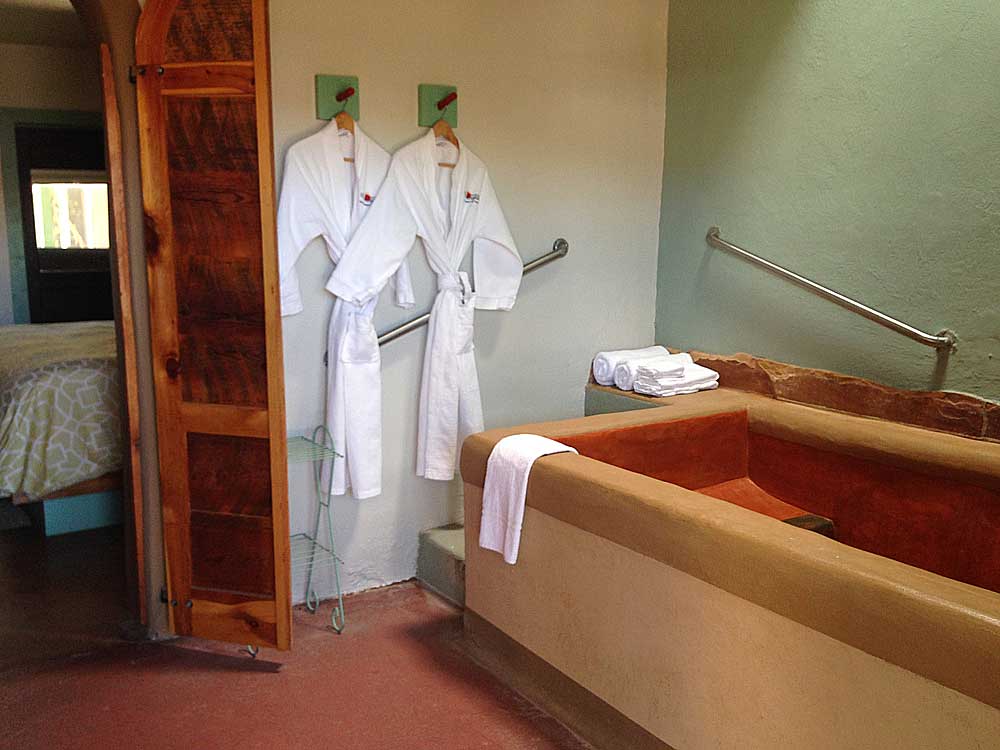
in-room springs, outdoor baths, soak by appointment, walk-ins
Blackstone Hotsprings
575-894-0894
Open to walk-ins from 9am-9pm daily. Call ahead to book the Wet Room or one of the 3 outdoor baths.
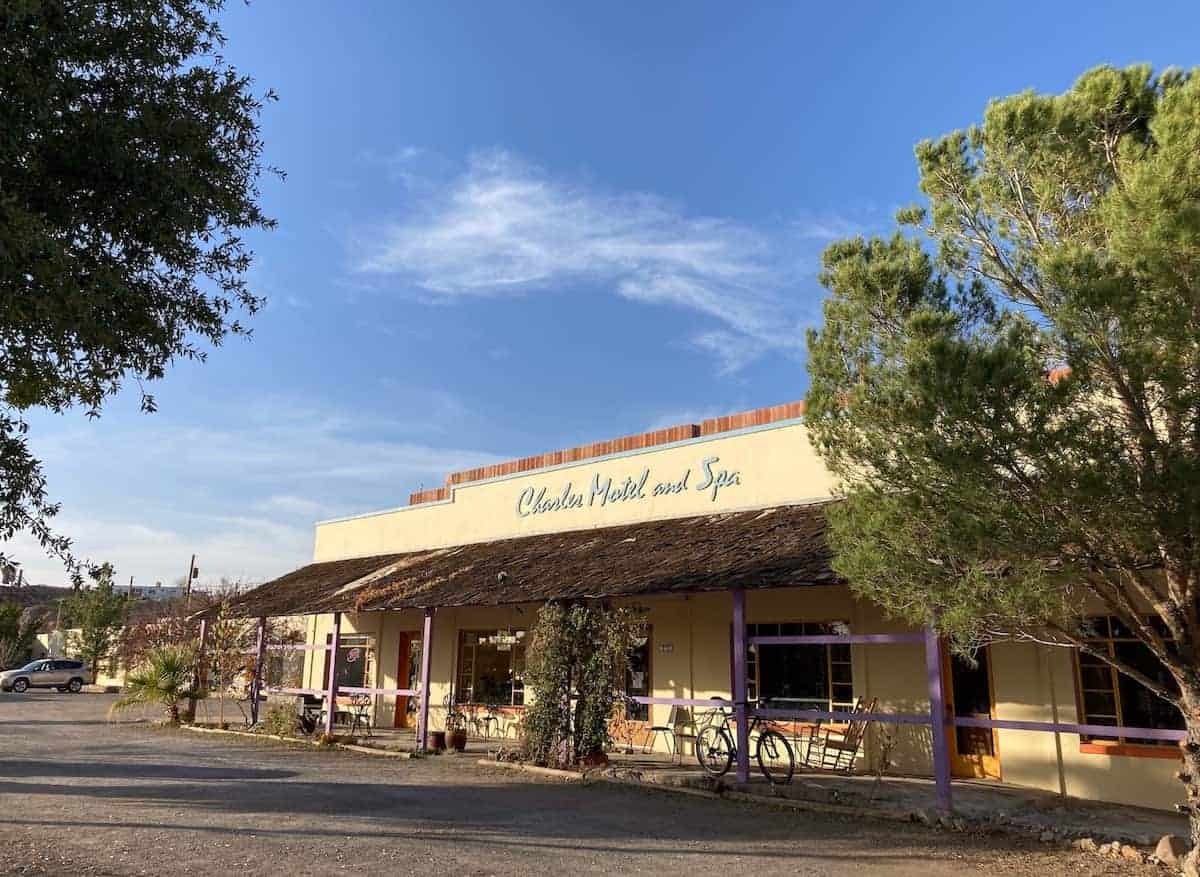
outdoor baths, soak by appointment, spa services onsite, walk-ins
Charles Motel & Hotsprings
575-894-7154
Baths at The Charles are open to walk-ins from 8am-10pm.
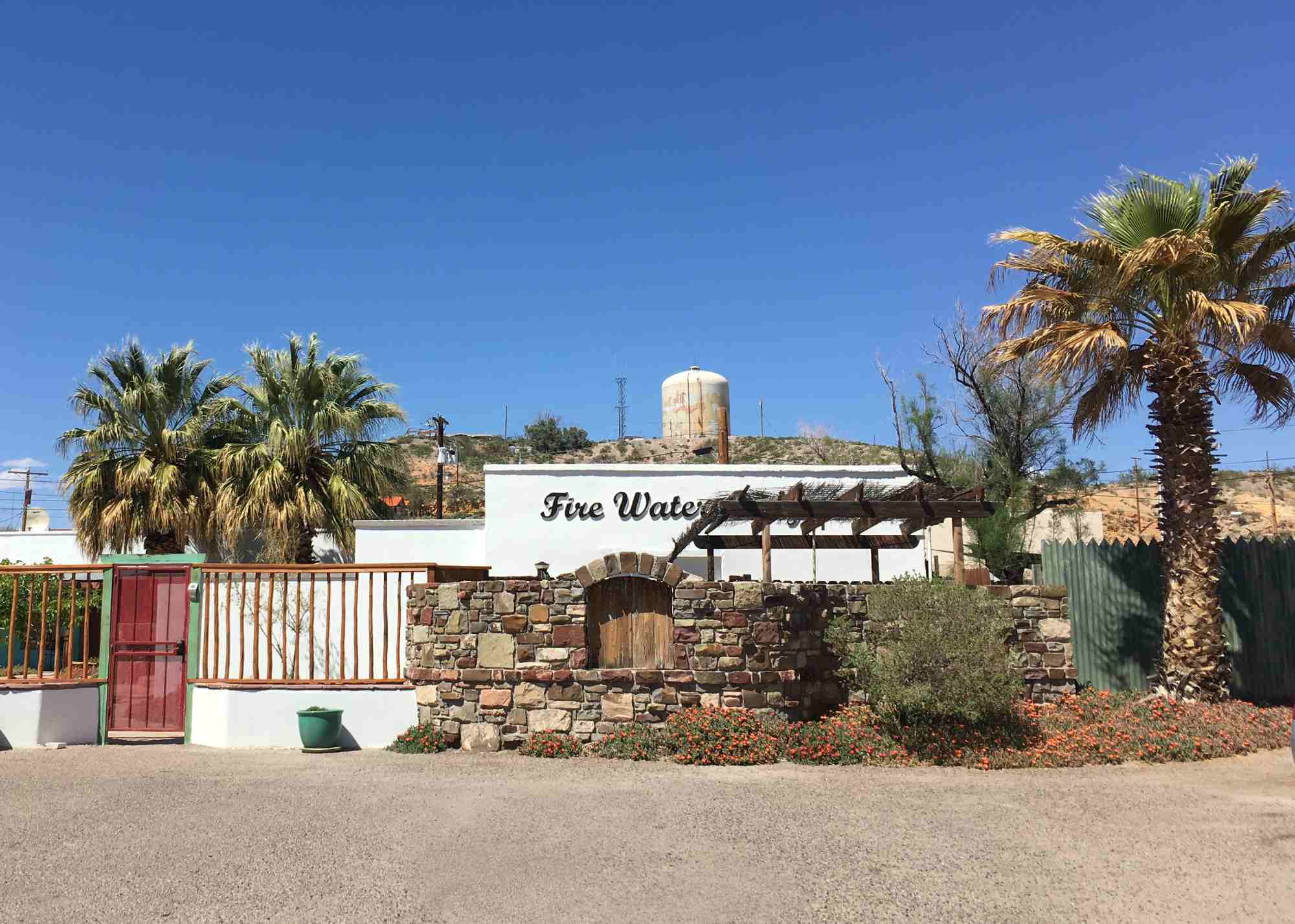
baths for lodgers only, in-room springs, outdoor baths, spa services onsite
Fire Water Lodge
575-740-0315
Fire Water offers free private baths for lodgers only.
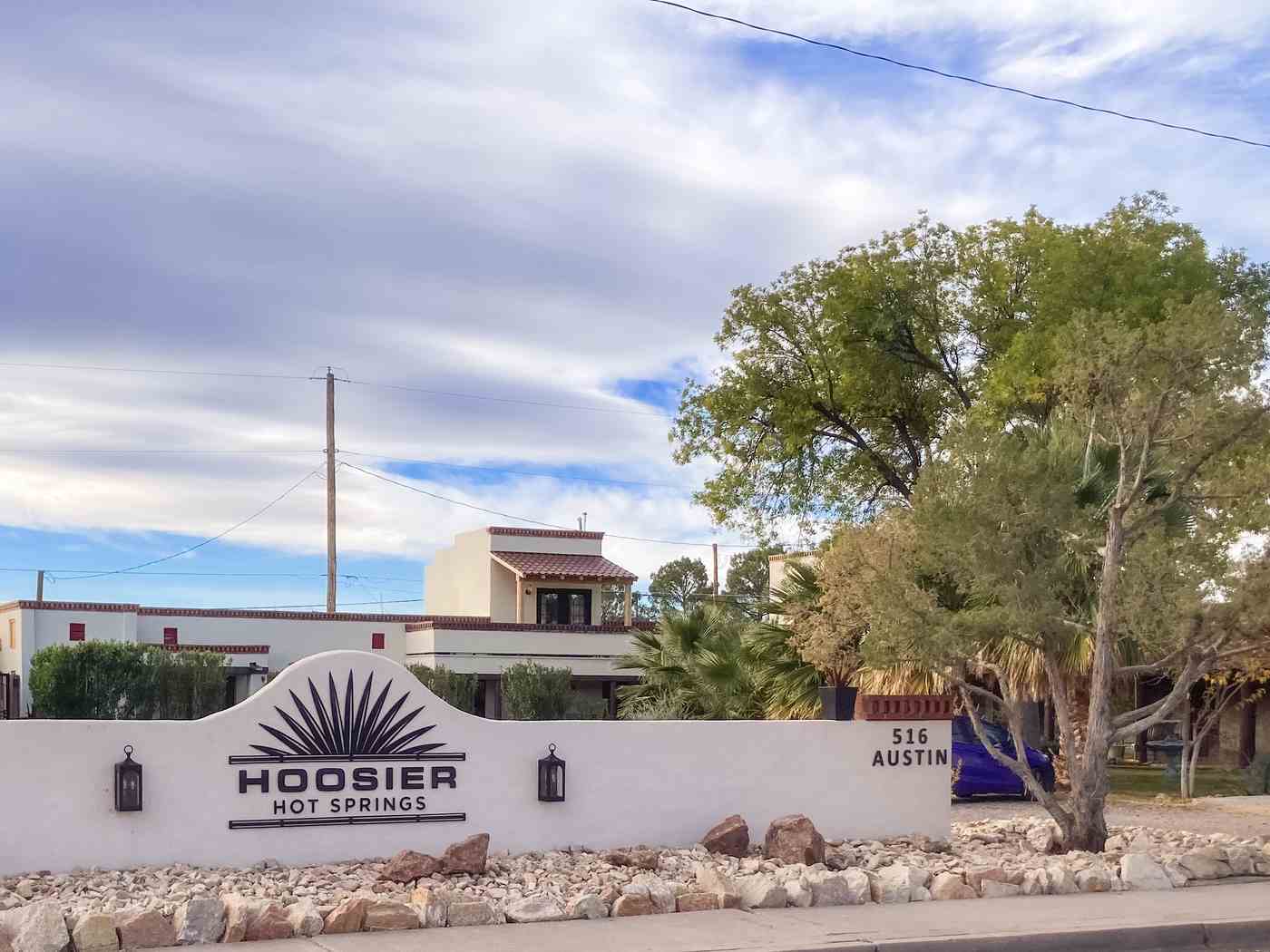
outdoor baths, soak by appointment, walk-ins
Hoosier Hot Springs & Inn
575-740-8959
Advance reservations are highly recommended. Pool areas are dog and cat friendly.

baths for lodgers only, outdoor baths
Hot Springs Glamp Camp
575-740-6775
Baths at Hot Springs Glamp Camp are available for guests only.
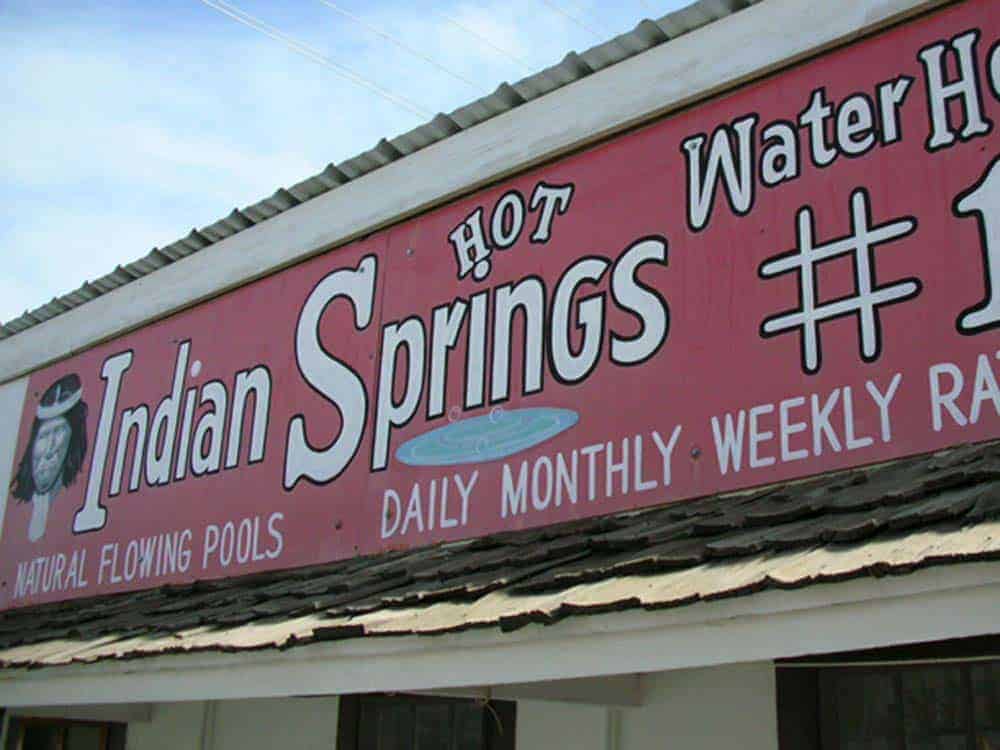
artesian springs, walk-ins only
Indian Springs
575-894-2018
Walk-ins are welcome at Indian Springs on a first-come/first-served basis. Stop by between 8am and 9pm daily!
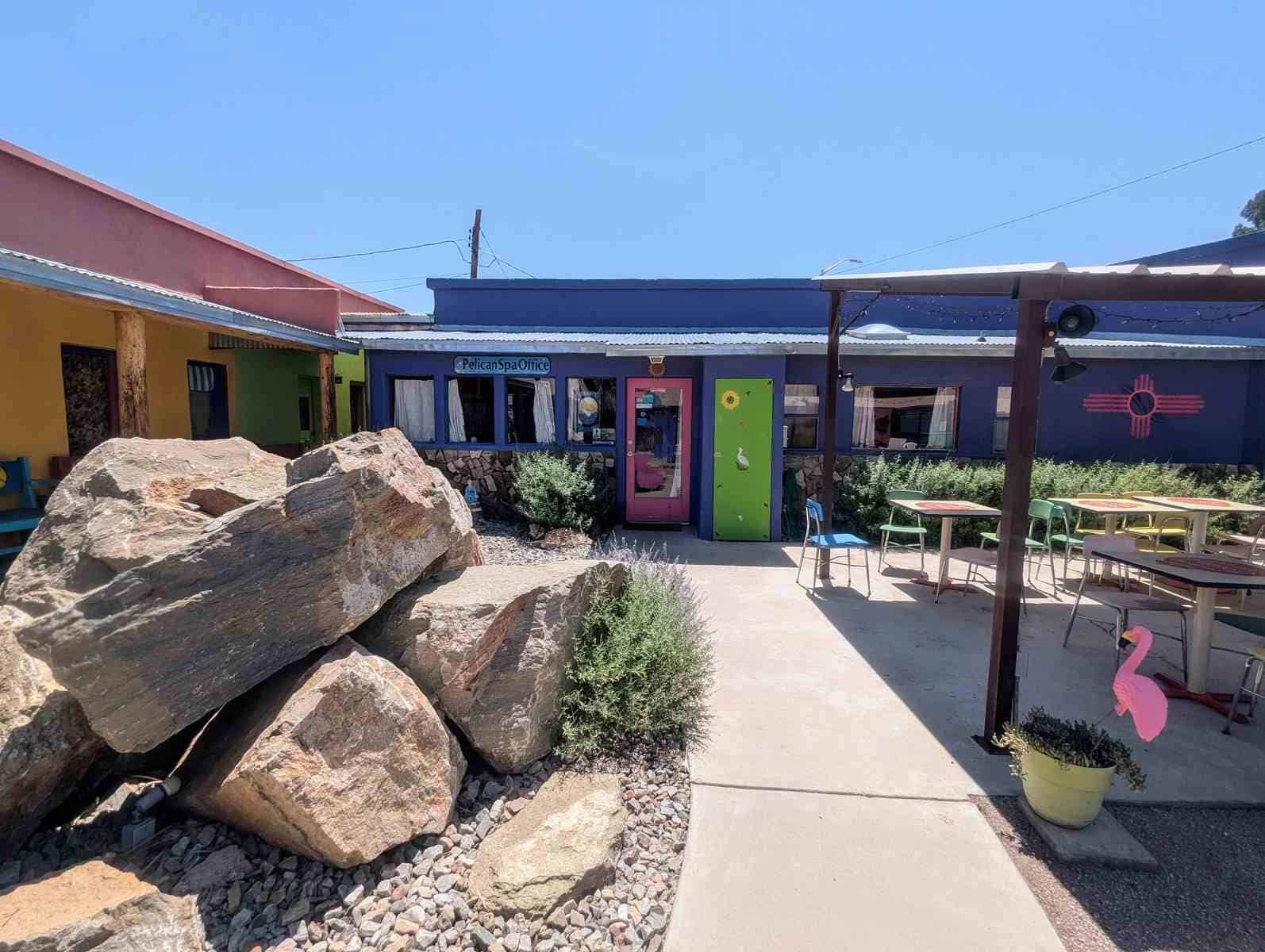
soak by appointment, walk-ins
Pelican Spa
575-894-0055
Guests of Pelican Spa have unlimited access; book appointments in the lobby.
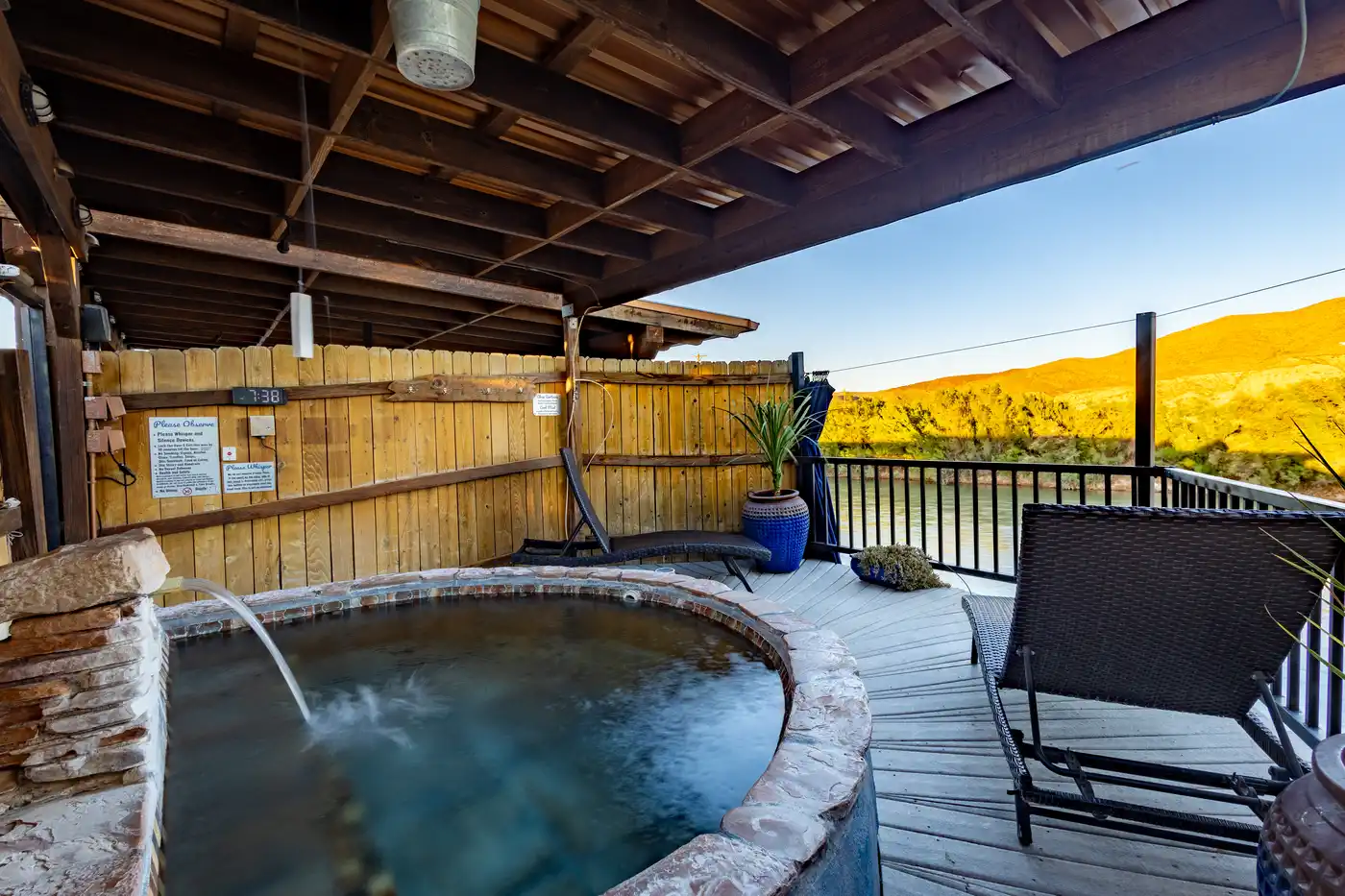
outdoor baths, soak by appointment, walk-ins
Riverbend Hot Springs
575-894-7625
Walk-ins are welcome during business hours, 8am-10pm, with the last soak at 9pm.
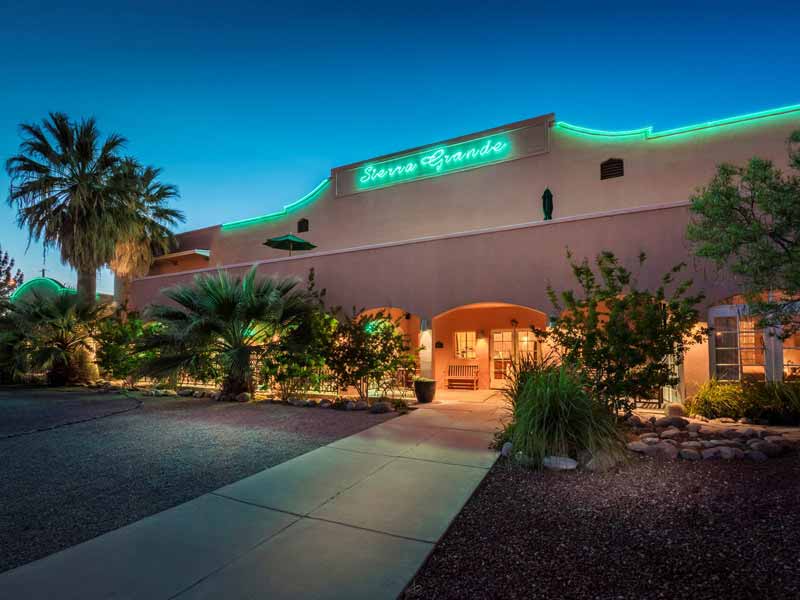
outdoor baths, soak by appointment, spa services onsite, walk-ins
Sierra Grande
877-288-7637
Appointments for hot spring soaks and various spa treatments can be booked in the lobby.

baths for lodgers only, outdoor baths
Spellbound Springs
575-268-0035
Soaking is available for guests of Spellbound Springs.

History of the Hot Springs as a Destination
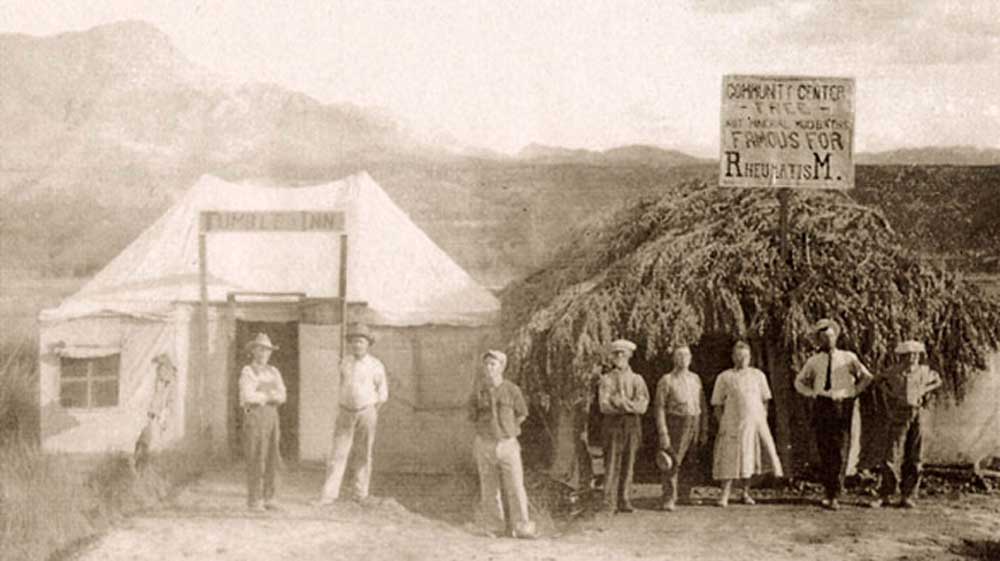
Downtown Truth or Consequences sits atop a large natural aquifer that produces somewhat salty, odorless water ranging in temperature from 100-115 degrees Fahrenheit. Were the city (and nearby Elephant Butte Dam) not here, the downtown area would be a swampy basin of warm mud, subject to seasonal flooding from the Rio Grande.

“Whatever Ails You”

The event that changed the area forever was the construction of Elephant Butte Dam between 1911 and 1916. Liquor and gambling were outlawed at the construction site, but establishments in the hot springs settlement five miles away offered both – and in abundance. The population grew rapidly and the town was incorporated in 1916.
Once the dam was completed, the flow of the river was altered such that more land could be claimed from the flood plain, allowing for stick frame bathhouses to be built in what had been swamp. Wells were sunk into the aquifer, allowing clear spring water to flow. The town developed as a health resort; hot mineral water was an accepted medical treatment, and slogans like “City of Health” and “Health Capital of the Southwest” drew visitors and healers alike.
Over the course of the 20th century, the town’s name was changed first to Hot Springs, then famously to Truth or Consequences. Some say that last change caused the mineral baths to be forgotten, but today the hot springs are one of the primary draws to Sierra County.
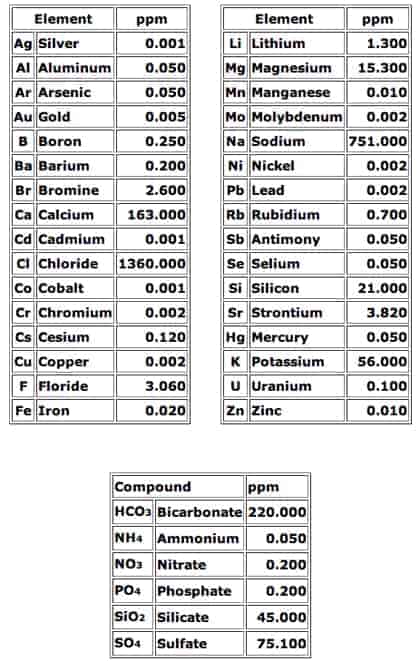
Truth or Consequences Mineral Water Analysis
FAQ
What makes the hot springs in Truth or Consequences special?
The water flows from a rift along the Rio Grande that formed over 50 million years ago. Deep groundwater reaches the surface without losing heat or minerals, resulting in odorless, pristine water containing trace elements of 38 different minerals, with nearly 2,700 parts per million of total mineral content — among the most heavily mineralized water in the United States.
What temperature is the water?
Water temperatures range from 98 to 115°F depending on the source. The pH is a neutral 7.
Does the water smell like sulfur?
No — one of its most notable qualities is that it has no unpleasant odor at all.
Is the water clean and safe?
Yes. The single largest mineral ingredient is chloride, a naturally occurring germ killer that sterilizes the skin and helps maintain the purity of the water.
How many hot spring spas are there to visit?
There are ten commercial hot spring businesses in Truth or Consequences: Blackstone Hotsprings, Charles Motel & Hotsprings, Fire Water Lodge, Hoosier Hot Springs & Inn, Hot Springs Glamp Camp, Indian Springs, Pelican Spa, Riverbend Hot Springs, Spellbound Springs, and Sierra Grande.
Do I need a reservation to soak, or can I just walk in?
It depends on the spa. Several — including Blackstone, Charles, Indian Springs, Hoosier, Sierra Grande, and Riverbend — welcome walk-ins during regular hours. Others are reserved for overnight guests only. It’s always a good idea to call ahead.
What are typical soaking hours?
Most spas are open roughly 8am–10pm daily, though hours vary. Call ahead.
Are pets allowed?
Hoosier Hot Springs & Inn specifically notes that its pool areas are dog and cat friendly. Policies vary at other locations, some don’t allow pets on the property, so check before bringing any along.
What is the history of the hot springs?
People have used these springs since before recorded history. During the late 1800s the area was known as “Palomas Hot Springs,” and the first bathhouses were actually tents where visitors would soak in hot mud. The town grew rapidly after Elephant Butte Dam was constructed (1911–1916), and developed as a health resort under slogans like “City of Health.” The town was later renamed Hot Springs, then became Truth or Consequences in 1950.
Is there a traditional belief about the healing properties?
Since the 1930s, it has been said that soaking daily for 21 days in the springs may “cure whatever ails you.” Historically, hot mineral water was considered an accepted medical treatment.